

 0
0
 0
0
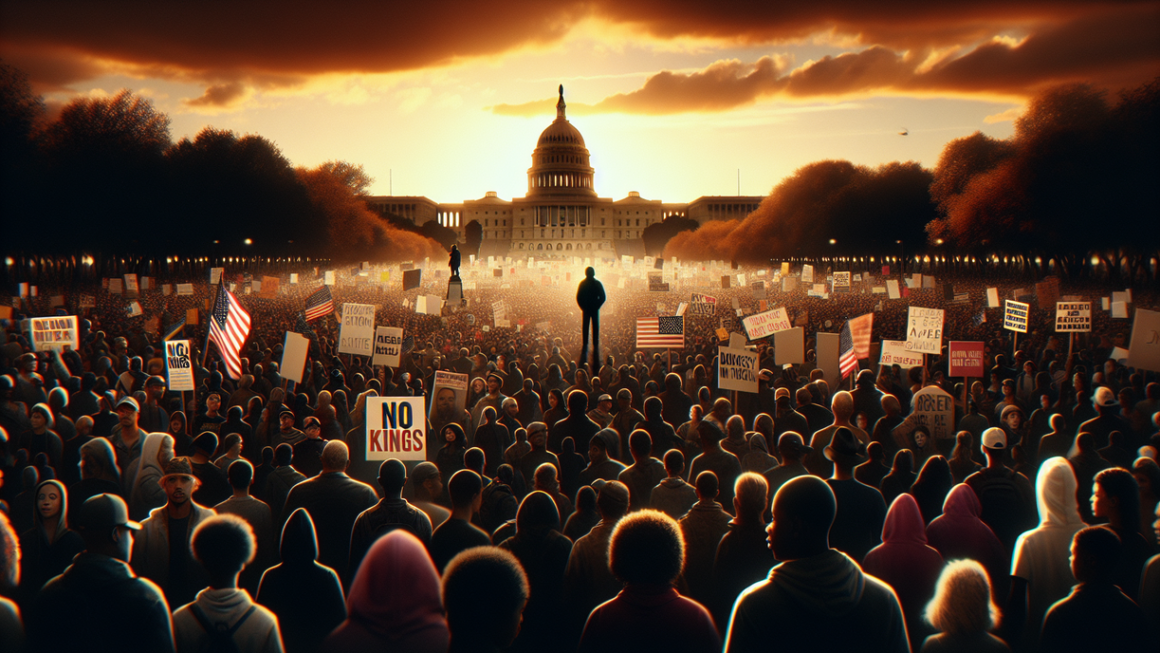
www.crystalskullworldday.com – tag:politics came to life on frozen sidewalks across the United States as the latest No Kings rally filled streets, parks, and courthouse steps. Hundreds of people faced biting winds and gray skies, choosing civic expression over comfort. They gathered not for entertainment but to question power, protest presidential decisions, and defend constitutional norms they feel are under threat. Through homemade signs, chants, and shared stories, this wave of activism turned cold weather into a backdrop for fierce democratic energy.
At more than 3,000 locations, the message reached far beyond major coastal cities. Suburban cul-de-sacs, small-town squares, and rural highway overpasses all became improvised forums for tag:politics. Participants denounced what they see as abuses of executive authority by President Trump, while also grappling with broader questions about leadership, accountability, and civic courage. The No Kings slogan captured a simple but powerful idea: in a republic built on equal citizenship, no leader should stand above scrutiny or law.
A Grassroots Wave in tag:politics
The third No Kings rally did not appear from nowhere. It followed years of turbulence inside tag:politics, from bitter campaigns to legislative gridlock. Yet something about this event felt different. Organizers relied less on national figures and more on neighborhood networks, faith circles, community centers, and online mutual aid groups. That local first approach created a mosaic of gatherings that echoed one another while retaining distinct regional voices. In one city, speakers focused on voting rights. In another, immigration took center stage.
Statistics alone cannot capture the mood, though the scale was remarkable. Over 3,000 registered sites signaled a level of coordination usually reserved for national holidays or major sports events. Many locations drew only a few dozen people, but the repetition across so many places produced a powerful visual map of dissent. Tag:politics is often portrayed as a clash of elites on cable news; here, it appeared instead as a patchwork of parents, students, retirees, workers, and veterans stepping into public life.
My own perspective sharpened while watching footage and reading first-hand accounts. The most striking detail was not clever signage or sharp slogans. It was the way strangers shared blankets, hand warmers, and thermoses, improvising small communities inside the march. Protests usually get framed as angry spectacles. Yet these scenes suggested something quieter: neighbors practicing how to care for one another while confronting authority. That habit of solidarity may become one of the most durable legacies of the No Kings movement inside tag:politics.
Why “No Kings” Resonates Now
The phrase “No Kings” taps directly into the country’s founding anxieties. The revolution rejected hereditary monarchy, favoring representative rule constrained by law. Today, protesters argue that certain presidential actions, executive orders, and public statements echo the arrogance earlier generations associated with royal courts. Whether one agrees with that comparison or not, the symbolism carries weight inside tag:politics. It frames debates about policy as debates about the basic structure of power itself.
Supporters of President Trump often view these rallies as overreactions, sometimes as coordinated attempts to deny election outcomes or sabotage governance. However, many participants describe their motivation less as partisan bitterness and more as a defense of institutions they believe are fragile. They worry about pressure on independent courts, hostility toward a free press, and disregard for ethical standards. For them, tag:politics is not an abstract game; it shapes whether government remains answerable to citizens rather than to one person’s will.
From my vantage point, the No Kings slogan succeeds because it sidesteps detailed policy disputes for a moment. It poses a simpler question: Should any president, regardless of party, be treated as an untouchable figure? The rallies answer with a clear no. That stance might unsettle those who crave strong, decisive leaders. Yet history shows how easily loyalty to a single personality erodes checks and balances. Tag:politics thrives when leaders expect scrutiny instead of worship, criticism instead of applause on demand.
The Future of Protest in tag:politics
No single rally can transform a political system, yet repeated gatherings gradually reshape expectations. When thousands regularly show up, even in harsh weather, they signal to officials that public attention will not fade after one news cycle. The No Kings protests reveal a renewed appetite for civic involvement that extends beyond voting day. If that energy channels into sustained local organizing, policy advocacy, and creative dialogue across divides, tag:politics could emerge from this era more participatory and resilient. The challenge lies in staying engaged without growing bitter, learning to oppose harmful decisions while still believing that shared institutions remain worth defending. In that balance, the real test of a republic without kings continues.