
 0
0
 0
0
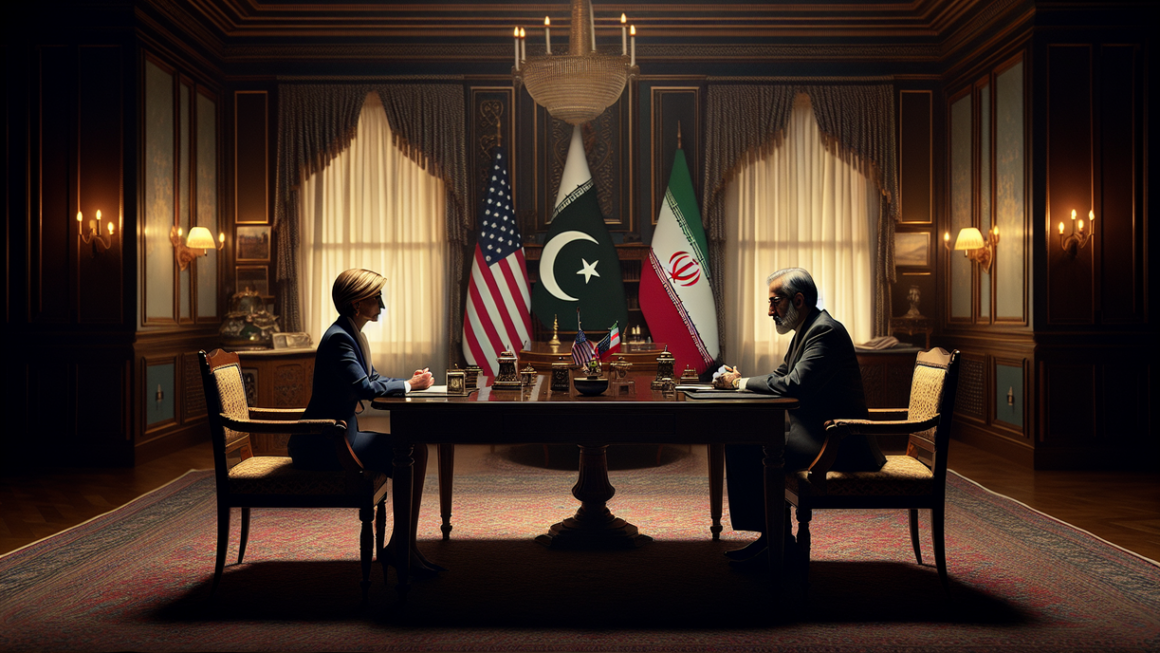
www.crystalskullworldday.com – Context shapes every war, every truce, every whispered chance at peace. Without clear context, even a historic meeting risks becoming another photo opportunity, another line in a diplomatic communiqué. The latest talks between US and Iranian representatives in Pakistan highlight how fragile the current ceasefire truly is, and how much depends on shared understanding rather than sheer force.
These encounters arrive at a moment when the ceasefire hangs by a thread. Missiles can still be launched, mistrust remains thick, yet both sides chose to sit in the same room. This choice matters. It suggests leaders recognize that context, not only weapons or sanctions, will decide whether this conflict slides back into chaos or moves, slowly, toward a different future.
Why Context Matters More Than Headlines
Most coverage focuses on spectacle: who shook hands, who stormed out, which official looked displeased at the table. That noise obscures deeper context behind these US–Iran talks in Pakistan. Two rival governments, with decades of hostility, accepted a neutral venue to explore fragile arrangements around a war-weary region. Pakistan’s role adds another layer of context, since it maintains complex relationships with both Washington and Tehran, while facing its own security dilemmas.
Context also lives in timing. These meetings took place while the ceasefire faces daily tests along disputed frontlines. Local commanders, proxy groups, and nervous civilians read subtle diplomatic signals, trying to decide whether to prepare for renewed fighting or dare to hope. Each small gesture at the negotiation table sends ripples outward, giving context to what happens on distant streets and border crossings.
Without this broader frame, the talks look like just another round of vague statements about peace. With context, however, they appear as part of a slow recalibration. Both capitals know that extended conflict drains budgets, isolates allies, and fuels domestic unrest. The ceasefire may be thin, but it creates space for different calculations. That shift in mindset could become more important than any single clause in a future agreement.
Inside the Room: Competing Narratives, Shared Risks
Behind closed doors, negotiators carry competing stories about how this war began and who bears responsibility. Each delegation arrives with briefing folders filled with maps, casualty data, and grievance lists. Yet context limits how far they can cling to their own narrative. Both understand that the ceasefire’s survival requires some space for the other side’s version of events, even if only as a grudging acknowledgment.
Power imbalances complicate this process. Washington brings global reach, extensive alliances, and sophisticated military assets. Tehran counters with influence over regional militias, resilient networks, and a proven tolerance for hardship. Context shows that neither can achieve total victory without unacceptable costs. This stalemate creates an opening for pragmatic discussion, not out of friendship, but out of mutual vulnerability.
Shared risks provide a quiet tether between enemies. Escalation could ignite wider regional turmoil, disrupt vital trade routes, and draw in additional powers. For Pakistan, host to these talks, that possibility feels especially real. Its own stability depends on preventing conflict from spilling across borders. That local context explains why Islamabad invested diplomatic capital to get adversaries to the same table, even if breakthroughs remain uncertain.
The Ceasefire’s Fragile Context
The ceasefire exists as much in people’s minds as on paper. Soldiers at checkpoints, families near potential flashpoints, aid workers crossing contested zones all interpret clues from these talks. When they sense commitment from leaders, they ease back from worst-case planning. When signals grow mixed or hostile, they brace for renewed shelling. The context of this truce is not only military; it is psychological, economic, and moral. My own view is that the ceasefire’s future rests less on any single clause than on accumulating gestures that build a new context of expectation: a slow, imperfect habit of talking before shooting, of asking what comes next before repeating what came before.
Pakistan’s Quiet Stagecraft
Choosing Pakistan as host was not accidental. Geography offers key context: positioned between rival blocs, connected to energy corridors, and exposed to instability on several fronts. Islamabad understands that prolonged conflict between the US and Iran would echo through its own streets, markets, and borders. Hosting talks allows Pakistan to shape this context rather than simply endure it.
Pakistan’s diplomatic playbook relies on subtlety. Officials must reassure Washington they remain a credible partner on security issues, while convincing Tehran that hosting these talks does not mean automatic alignment with US priorities. That balancing act gives further context to every handshake, every press release, even the seating arrangement inside the conference room. Appearance and symbolism influence how domestic audiences interpret the process.
From my perspective, Pakistan’s role shows how so-called “middle powers” increasingly try to manage global turbulence. They lack the resources of superpowers, yet they inhabit the crossroads where rival ambitions collide. Their interest lies in stability, trade, and predictable borders. Placing these talks in Islamabad reframes context: this is not merely about two adversaries, but about a whole region trying to avoid another devastating spiral.
Regional Ripples and the Wider Context
Any discussion between Washington and Tehran automatically involves neighbors. Gulf states monitor every announcement, worrying that new compromises could reshape security guarantees or energy markets. Israel follows any hint of relaxation with suspicion, concerned that its strategic edge might shrink. Russia and China observe closely, evaluating whether shifts in US–Iran relations will alter their own influence in the region.
That network of observers creates a dense context for even modest concessions. If the US hints at easing certain sanctions, allies wonder what they might lose in return. If Iran signals flexibility on proxy activities, partners question whether this commitment will hold beyond the current ceasefire. Each gesture reverberates through embassies and intelligence briefings, where analysts work to decode subtext.
This layered environment complicates simple narratives of progress or failure. A small breakthrough on prisoner exchanges might carry outsized symbolic value, building trust for more complex security talks. Conversely, a single airstrike, even if unintended, can collapse delicate understandings. Recognizing that context helps explain why diplomats move slowly, why wording appears cautious, and why celebrations after each round remain muted.
Information, Misinformation, and Public Context
Public opinion forms another crucial layer. Citizens across the region receive information through fragmented sources: state media, social networks, diaspora communities, and local rumors. Each source frames the talks differently. Some emphasize hope, others warn of betrayal. As an observer, I believe this information ecosystem either reinforces or undermines the context of compromise. When media outlets highlight only maximalist demands, moderate steps look like weakness. When they explain the complexity behind each small gain, societies become more willing to endure the slow pace of diplomacy. In that sense, the battle over context is also a battle over narratives, fought not only in conference rooms, but in headlines and comment sections.
Personal Reflections on the Path Ahead
Watching these developments from a distance, I keep returning to the idea that context is the quiet architect of outcomes. No single meeting in Pakistan will resolve decades of hostility. Yet each respectful exchange slightly alters the backdrop against which future crises will unfold. Once adversaries grow accustomed to talking, even under pressure, the threshold for outright war shifts upward.
At the same time, it would be naive to overlook serious obstacles. Hardliners on all sides benefit from persistent tension. Arms manufacturers, ideological movements, and political factions thrive on fear. They work to reshape context in their favor, emphasizing worst motives in every action. The challenge for diplomats and informed citizens is to push against that gravitational pull, insisting on a richer, more nuanced understanding of what is possible.
Ultimately, the value of these US–Iran talks in Pakistan may lie less in any immediate agreement than in the habits they foster. Repeated contact can humanize rival decision-makers, reveal shared constraints, and expose miscalculations. As long as missiles remain ready and militias stay armed, peace will feel provisional. Yet history suggests that durable settlements rarely emerge from a single dramatic summit. They grow, step by tentative step, out of evolving context, sustained curiosity, and a willingness to revisit assumptions before it is too late.
A Reflective Conclusion: Choosing Context Over Chaos
The current ceasefire stands at a crossroads. It could collapse under the weight of mistrust, or evolve into something more stable. The talks in Pakistan do not guarantee survival, but they offer a different frame: one where dialogue, not escalation, becomes the first instinct. That shift is fragile, constantly threatened by spoilers and accidents. Still, it represents a meaningful departure from the logic of permanent confrontation.
For those observing from afar, the most constructive response is to demand better context from leaders and media alike. Ask not only what happened, but why, and for whom. Question simple stories that cast one side as entirely virtuous and the other as entirely malicious. Reality lives in the gray zones where fears, interests, and hopes intersect. Only within that fuller context can citizens hold policymakers accountable to more than slogans.
If a lasting peace ever emerges from this conflict, future historians will likely trace its origins not to a single breakthrough, but to a series of modest conversations that slowly altered expectations. The talks between US and Iranian officials in Pakistan might be one such moment. Their true significance lies not just in what was said, but in what became thinkable afterward: that even entrenched enemies can, under enough pressure and with sufficient imagination, choose context over chaos.
Looking Forward with Cautious Hope
As the ceasefire endures day by precarious day, the real test will be whether these talks expand the space for creative solutions instead of narrowing it to old ultimatums. My cautious hope rests on the belief that context can change faster than identities. Governments may still see each other as adversaries, yet they now operate within a landscape shaped by exhausted populations, stretched budgets, and shared regional risks. That landscape rewards restraint more than bravado. If negotiators remember who pays the highest price when diplomacy fails—ordinary people with no say at the table—perhaps they will protect this fragile ceasefire not as a pause before the next strike, but as a bridge toward something more enduring.